René Descartes and Cartesian Dualism
Article by Selomon
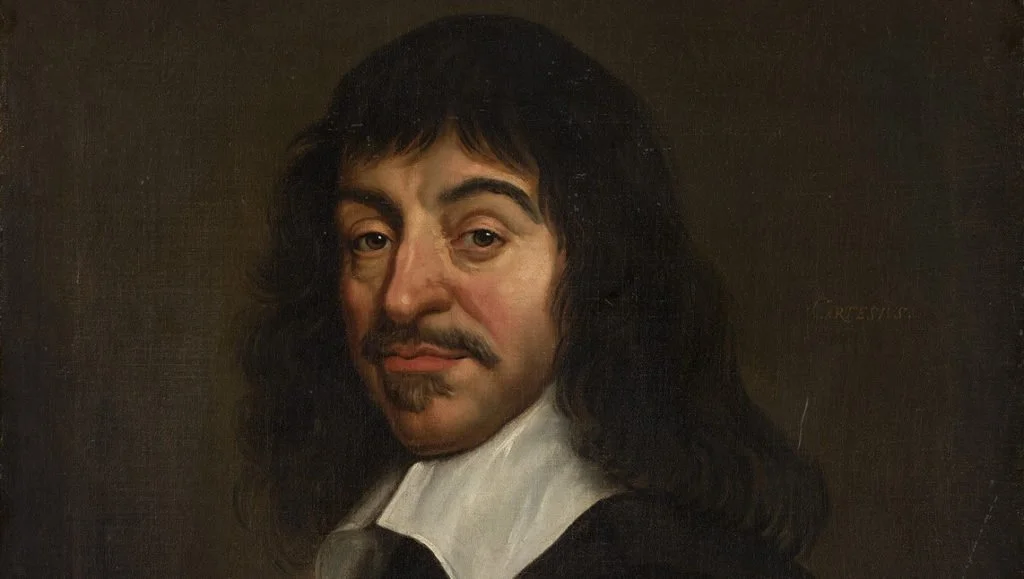
The free media repository., CC BY-SA 2.5 <https://creativecommons.org/licenses/by-sa/2.5>, via Wikimedia Commons
In this article, I will discuss Cartesian dualism, starting with the philosopher who developed it, René Descartes; the culture and era he lived in and was influenced by; specifics about the subject under study; and finishing with my own opinion on why it is something modern philosophy students would be compelled to study and what I believe about the metaphysical discourse offered by Descartes. Cartesian Dualism is the view that reality is divided into two categories of substances: great-uncle, who were Roman Catholic, in France, minds and bodies (Alison, n.d.).
René Descartes was a late 90’s baby in the 1500’s living until 1650 (Watson, 2026). He coined the phrase “I think, therefore I am” as he moved away from more mainstream philosophical thinking within the era of his culture while he developed a new way of thinking with mind-body dualism. Descartes was raised by his grandmother and great-uncle, who were Roman Catholic, in France, where there was ongoing religious conflict with Huguenots. At age ten, he was sent to the prominent Jesuit college at La Flèche, where he studied mathematics, science, metaphysics, and acting. Though his father expected him to get into politics, he continued his intellectual path, studying mathematics, engineering, and metaphysics, which saw the advent of the universal scientific method and Cartesian dualism.
The time Descartes spent at Jesuit college at La Flèche exposed him to scholastic Aristotelianism, which he later rejected, and mathematics, which he later built on (Smith, 2023). While stationed in Breda as a mathematics and engineering student in the army of Prince Maurice of Nassau, Descartes met Isaac Beeckman, with whom he developed a student-teacher relationship. This connection fueled a fire of passion to go deeper into the sciences within Descartes that led him to work out a theory of harmony within mathematical terms. This allowed him to see the body and nature as a machine with contact mechanics. Through his dealings with the religious era and needing his philosophy to be accepted by theologians, dualism preserved the idea that the mind and soul are non-material.
Cartesian dualism is the view that the mind is an immaterial, non-spatial thinking substance, whereas the body is a physical, divisible material substance (Naragon, n.d.). The core beliefs of Cartesian dualism include:
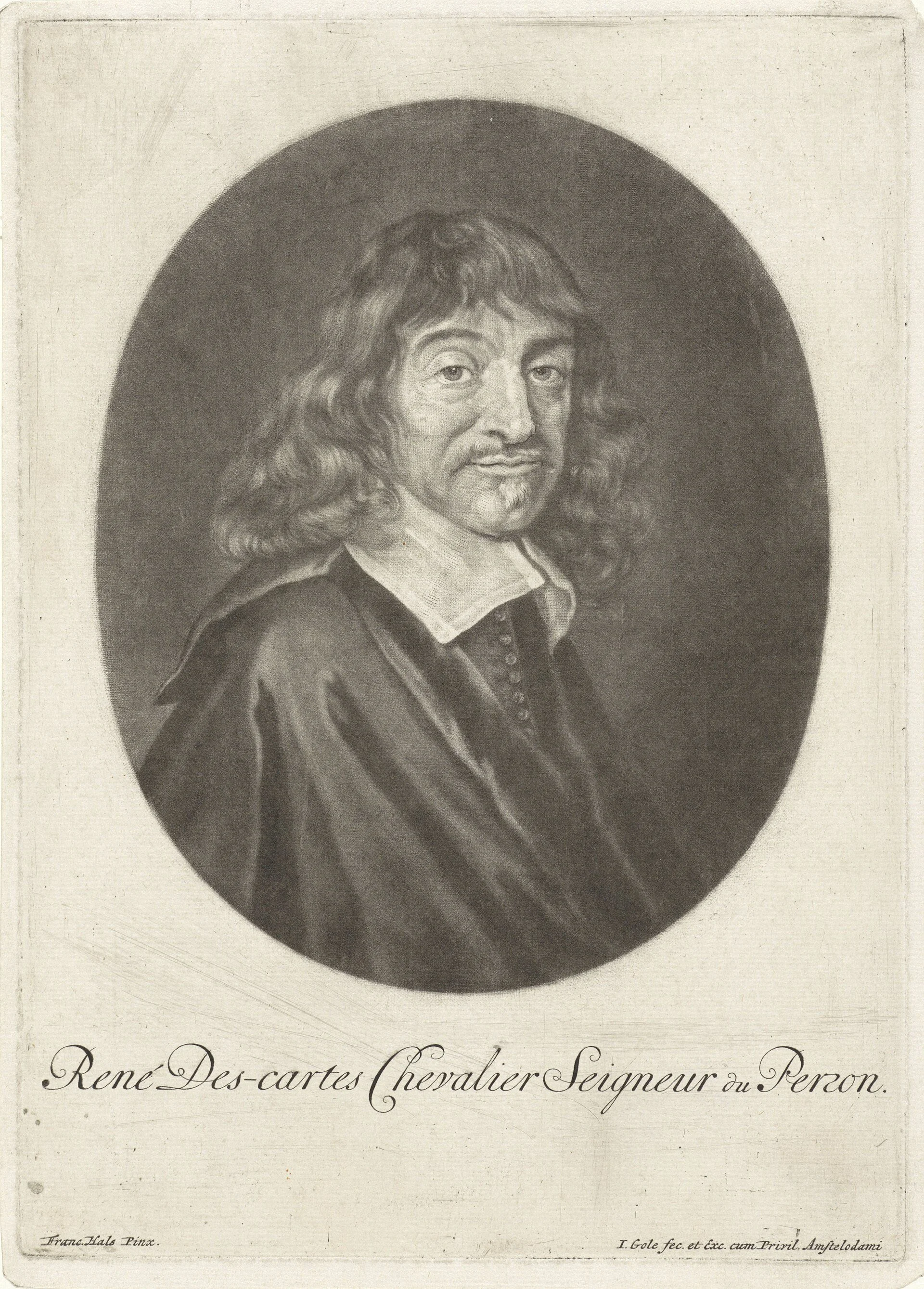
Rijksmuseum, CC0, via Wikimedia Commons
Human Being Composites - Every person has one mind and one body that interact causally.
The Mind is Irreducible to the Physical - In this view, thought is an attribute of the mind, which is able to express that attribute in different ways, including our experiences, emotions, and awareness, which appear to occur inside the mind, not the brain (Philosophy Institute, 2026).
The Mind is Distinct from the Body - Descartes argues that bodies take up physical space, while the mind does not. Therefore, they must be different substances.
Descartes is able to doubt the existence of his body because senses can be deceiving and dreams can mimic reality, but he is unable to doubt the existence of himself as a thinking thing, and that is why he concludes the mind and body must be distinct substances (Alison, n.d.). The problem with this claim is that Descartes provides no valid mechanism for explaining how two different substances can influence one another (Philosophy Institute, 2026). John Searle claims that consciousness is a biological phenomenon and believes there is a dichotomy issue between old Cartesian beliefs and modern physics (Watson, 2026). In his own answer to this problem, Descartes offers that the mind and body are able to interact through the pineal gland at the center of the brain, which the soul can move through by directing nerves and muscles (Philosophy Institute, 2026).

I believe that the view of Cartesian dualism is still relevant and something modern philosophy students are compelled to study because there are still a lot of differing opinions on how something immaterial, like our minds, is able to govern a physical body. Many of my readings pointed out how Descartes helped shape modern science and medicine, so it is important to study the framework of how science came to be where it is today. In my area of focus with computer science, I can see a similar connection between the mind and body with hardware and software, where the body is like the hardware that takes up physical space and the mind is like software that includes the logic and does not take up physical space.
My own background and upbringing include different religious and spiritual experiences, as well as being empirically trained through my undergraduate program. Through this, I can comprehend how the mind and body could be separate substances. I can’t say I study neurology, but I do believe the pineal gland has some connection to the soul and mind.
References
Alison, J. (n.d.). A look at Cartesian dualism. https://www.hep.upenn.edu/~johnda/Papers/Dualism.pdf
Naragon, S. (n.d.). Cartesian dualism. Manchester University. https://users.manchester.edu/Facstaff/SSNaragon/Online/100-FYS-F16/Readings/Naragon,%20CartesianDualism.pdf
Philosophy Institute. (2026, January 13). Cartesian dualism: Navigating the mind–body divide. https://philosophy.institute/western-philosophy/cartesian-dualism-mind-body-divide
Smith, K. (2023). Descartes’ life and works. Stanford Encyclopedia of Philosophy. https://plato.stanford.edu/entries/descartes-works
Watson, R. A., & Britannica Editors. (2026, September 5). René Descartes. Britannica. https://www.britannica.com/biography/Rene-Descartes

Christopher “Selomon” Closson is a meditation guide, creator, and student of life. He has been working with meditation since 2011. His meditation videos on YouTube have reached hundreds of thousands of people. He enjoys being creative and learning new things. As of September 2026, he still creates meditations on Insight Timer and is currently getting a degree in computer science.